Familiar food, fresh water and a gradual diet change.
Oriental Shorthair, white
Price on request

 OriSiaByViolettOriental Cattery
Elegant, intelligent cats
with a character of their own
Raised at home
with care
Socialized with
children and other pets
WCF registration
Travel options
on request
Home-raised Oriental Shorthair kittens
Oriental Shorthair, white
Oriental Shorthair, white
Oriental Shorthair, white
Oriental Shorthair, white
OriSiaByViolett is a small home-based Oriental Shorthair cattery in Saint Petersburg, Russia. We raise our kittens with daily attention and focus on health, socialization and the qualities that make the breed distinctive.
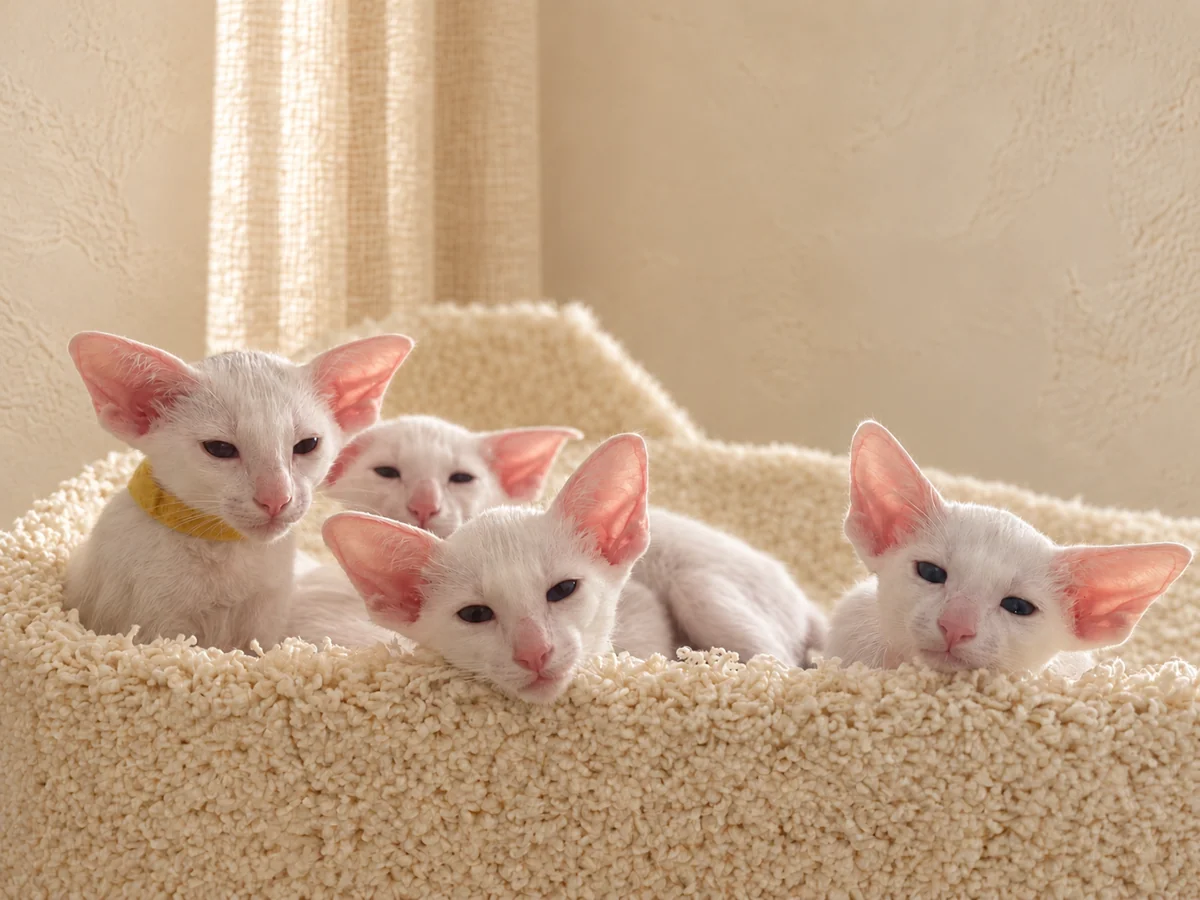
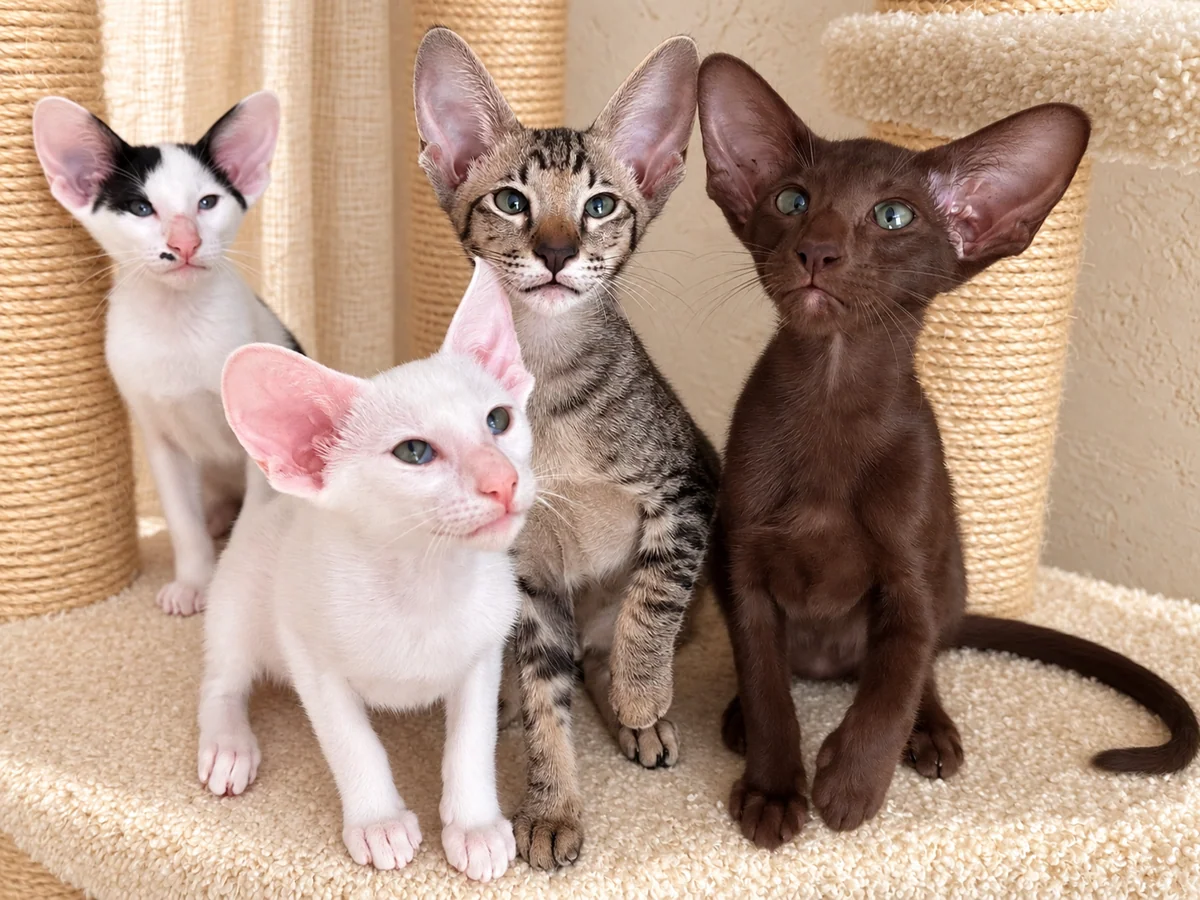
Graceful, intelligent and full of personality, Oriental Shorthairs thrive on companionship.
Practical advice for life with your new kitten
Familiar food, fresh water and a gradual diet change.
Ask the breeder what your kitten eats, how often and in what portions. Have that food ready before arrival. If you decide to change it, introduce the new food gradually and watch for changes in appetite or stools.
Look for a complete food formulated for growing kittens. This matters more than marketing terms or price. Wet and dry kitten foods are both options. Follow the portion instructions and discuss changes with your vet as your kitten grows.
If you want to prepare food at home, ask a veterinary nutritionist to formulate a balanced diet for growth. Meat alone or an improvised mixture of meat, grains and vegetables cannot reliably meet a kitten’s needs. Keep fresh water available and wash the bowl regularly. Contact your vet if your kitten develops vomiting, diarrhea or refuses food after a diet change.
Help your kitten get comfortable with brushing and nail care.
Start with short sessions while your kitten is relaxed. Let them sniff a soft brush, make a few strokes in the direction of hair growth and finish while they are still comfortable. Brushing a short coat removes loose hair and gives you a chance to spot skin irritation.
Check longer coats more often, particularly where friction causes tangles. If a mat sits close to the skin, ask a groomer or vet for help.
Bathe only when needed, such as when dirt cannot be wiped off with a damp cloth. Use a product made for cats, rinse well and towel-dry in a warm room. Put a sturdy scratching post near your kitten’s resting spot. Get them used to having their paws touched and ask a vet or groomer to show you how to trim the clear tip safely.
What to ask your vet before surgery.
If you do not plan to breed your kitten, discuss spaying or neutering at an early vet visit. The vet can recommend a time based on age, development and health. Check any terms in your agreement with the breeder.
Surgery prevents unplanned litters. Some behaviors associated with mating may decrease, but results vary. Tell your vet about any spraying, restlessness or attempts to escape.
Ask the clinic about pre-operative checks and follow its instructions about food and water before anesthesia. Prepare a quiet recovery area. Ask how to protect the incision, when play can resume and whether a follow-up is needed. Contact the clinic if your kitten seems unwell or you notice a problem with the incision.
What to bring to your kitten’s first veterinary appointment.
Bring your kitten’s vaccination, parasite treatment and medical records. Tell the vet about food, appetite and behavior since the move, as well as any other pets at home or planned travel.
Ask for a schedule that takes your kitten’s age, previous vaccines and exposure into account. Discuss preventive care even for an indoor kitten. Record each treatment and confirm when the next visit is due.
Notice changes in appetite, activity, breathing or litter box use. Call the clinic if your kitten refuses food, becomes unusually lethargic or has repeated vomiting or diarrhea. Difficulty breathing or straining to urinate without producing urine requires urgent veterinary care.
Get your home ready and help your kitten settle in.
Bring your kitten home when you have time to stay with them. Set up a quiet room with water, a hiding spot and a litter box away from the bowls. Open the carrier and let the kitten come out on their own. Keep the routine calm and introduce other rooms gradually, with easy access to the litter box.
Use a wand toy or ball and redirect play if your kitten grabs your hands. Provide a secure perch. Fit sturdy window screens and restrict access to tilt-open windows and balconies. Put away cords, string, small items, household chemicals and toxic plants. Keep bins closed, watch hot surfaces and check the washing machine before starting it. Give your kitten a quiet room during repairs or furniture moves.
Get in touch to learn about our kittens,
our cattery and how to welcome
a kitten into your home.